Showing posts with label Anthology Film. Show all posts

Friday, January 6, 2012

'Dr. Shock's Tales of Terror' mostly disappoint

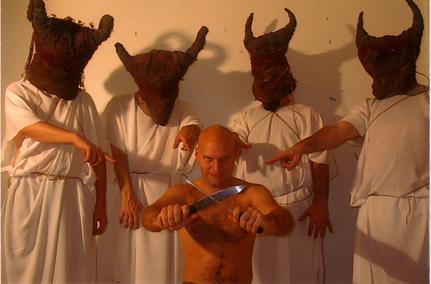
Dr. Shock's Tales of Terror (aka "Tales of Terror") Starring: Bruce Hoyt, Bob Kelly, Mark Standriff, Chris-May Zeithaml, Douglas Agosti, Otto Smith, Kristen Brochetti, Elena Pointinger, Dennis Staples, Mark Newman, and Timide
Directors: Douglas Agosti and Lance Otto Smith
Rating: Three of Ten Stars

I've come to believe that there are two general statements that can be made about anthology films. First, it doesn't really matter if any one segment is weak, because something else is going to follow in sort order, and it'll be better. Second, the best is usually saved for last (or second last).

When it comes to the anthology film "Dr. Shock's Tales of Terror", both of those general statements are inaccurate. While each segment is brief--the film is a collection of four short splatter flicks, each with an introductory host segment--it doesn't follow that what comes next is better. Similarly, the film doesn't save the best for last; in fact, as it progresses, things get steadily worse.

I'm going to assign ratings to each part of the movie as I discuss it. The rating at the top of this post is an average applied to the entire film.

The tone for the film is set in the host segments. Each film in "Dr. Shock's Tales of Terror" is, naturally enough, introduced by Dr. Shock, an obnoxious and very unfunny character who is like a male Elvira on a cocktail of uppers. His antics are supposed to be reminiscent of the Crypt Keeper, and the stories he introduces are likewise supposed to be tales of gore with humor and twist endings, just like "Tales From the Crypt" when it was at its best. Sadly, Dr. Shock and his material are nowhere near the quality of even the worst "Tales From the Crypt" episodes. The host segments do what their supposed to, but they're more irritating than funny, so they rate 5/10.


The first of the four terror tales included is "Bullet for a Vampire". In it, the bitchy daugther (Zeithaml) of a mobster (Standriff) brings a gypsy curse upon her family, in the form of a vampire (Timide) who introduces himself as "Drake Uala, from a small town in Scandinavia." (And, yes, that is so stupid that I resigned myself to the fact that I was in for something truly craptacular.) However, the story is amusing enough, and the performance of Standriff as a mobster who takes on vampires with an attitude that would humble anyone in the Soprano household, makes it even more entertaining, despite the badly written dialogue. The sets and vampire makeup are also pretty decent for a low-budget, shot-with-a-camcorder production. It could have done with a little trimming here and there, but, it wasn't a bad effort. I give it 5/10, and note that it could have been a 6/10 if the script had been tightened up a bit.

The second film is "The Town That Loved Pizza", and it deals with a pair of creepy strangers (Hoyt and Kelly) who open up a pizza parlor on the outskirts of a small town in northern Texas. Their all-mean pizzas become all the rage in the town, but when citizens start vanishing, the question arises: Just what is the mystery meat on those beloved pizza pies? I think this one was supposed to be equal parts gross, horrifying and funny, but it's really just predictable, over-long and dull. It gets 2/10.

Next up, we have "The Garden Tool Murders" which features a grounds-keeper who goes nuts and starts killing people who litter or otherwise behave in an anti-social fashion in and around a small town park. Who will stop the rampage? Well, the answer is almost as horrifying as the Garden Tool Murders themselves. Very silly, very gory, and nowhere near as dull as "The Town That Loved Pizza" this short is almost as good as "Bullet for a Vampire", and it rates 5/10.

Closing out the collection is "Demon's Day", a nonsensical little effort that demonstrates why cloning is bad and shows that the preferred method by which a demon dispatches a victim is by pulling his or her head off. (It's also the film that made me realize that Miss Cherry from "The Garden Tool Murders" WASN'T a guy in drag, as Kristen Brochetti reappears here as a hooker seeking redemption from the Lord; she just happens to have a very... um... severe face. If there was a point to "Demon's Day" and its weird circular "was it a dream or wasn't it" content, it was one that's either too deep or too dumb for me to grasp. It rates 1/10

"Dr. Shock's Tales of Terror" is an all-around disappointment, even for someone like me who loves the anthology format. "Bullet for a Vampire" and "The Garden Tool Murders" have the genesis of good ideas within them, but I think that the efforts of Agosti, Smith and Friends demonstrate here that there's more to making good movies than enthusiasm and good ideas. (In the hands of someone with more experience or talent or both, or if some more work had gone into the scripts, I think those could have been truly fun little movies. But, "could have" is not good enough for a recommendation. And, as much as I'd rather not, I must advise all to take a pass on this film.

Monday, December 26, 2011

It's Price Times Three in 'Twice-Told Tales'

Twice-Told Tales (aka "Nathaniel Hawthorne's Twice-Told Tales" and "Nights of Terror") (1963)
Starring: Vincent Price, Sebastian Cabot, Beverly Garland, Brett Halsey, Joyce Taylor, and Mari Blanchard
Director: Sidney Salkow
Rating: Eight of Ten Stars

"Twice-Told Tales" is a collection of three short films loosely based on stories by Nathaniel Hawthorne. They are a nice mix of melodrama and horror, and, although they unfold somewhat slowly (and those who think a horror movie has to have gore and violence or it not worth seeing will be bored), each tale features some great classical style acting and chilling twist endings that will keep lovers of well-done dramas entertained.

Vincent Price plays the lead in two of the three segments, and he displays clearly why he was a rising leading man in Hollywood until he shifted gears career-wise and became a star of horror films. Although he is the villain in each piece, he carries himself with such an air of melancholy-tinged elegance that one can't but feel a little sympathy for the evil men he portrays.

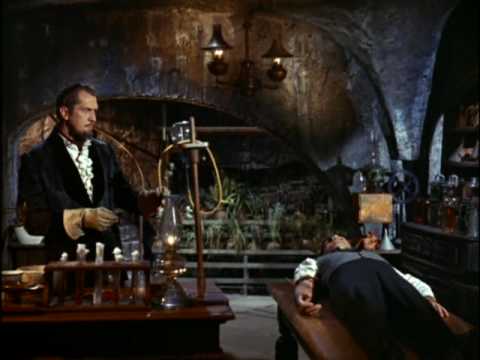
In film opens with "Dr. Heidegger's Experiment." Here, Price plays the best friend of the title character (played by Sebastian Cabot), a scientist who discovers a literal fountain of youth in the crypt of long-dead woman they both loved. The two friends regain their their youth, and even manage to resurrect their beloved Sylvia (Blanchard). Unfortunately, turning back the hands of time also resurrects dark secrets long buried.


The second story is "Rappaccini's Daughter". In it, Gionvanni (Halsey) falls in love with a mysterious beauty (Taylor) who never leaves the mansion and walled garden she shares with her father, Rappaccini (Price). It soon comes to light that Rappaccini used chemistry to turn his daughter's very touch poisonous to protect her from sin... and when it becomes clear to him that Giovanni and his daughter love each other, he takes steps to ensure they'll be together and faithful to each other forever. This is perhaps the oddest and saddest of the three tales, and while Price's character is definitely a total madman in this story, he still manages to bring a sympathetic quality to Rappaccini in his performance.

Finally, we have a very loose adaptation of Hawthorne's novel "House of Seven Gables" where Gerald Pyncheon (Price) returns to his his ancestral home with his wife Alice (Garland) and awakens a restless spirit and a deadly curse. While the first two stories were tragedies with "mad science" overtones and nifty twist endings , this one is pretty much a standard haunted house story with all the various expected elements used exactly as anticipated. It's not only a fairly bad take on Hawthorne's novel, but it's also the weakest short film here, and it was one that saw me wishing for the credits to start rolling. Still, Price gives a good performance, and there's never anything wrong with watching someone as lovely as Beverly Garland, even if she is in some nicely put-together dreck. (Oh... and the model shot of the house of the title is probably one of the worst bit of special effects since the Alpine village in Hitchcock's "The Lady Vanishes.")

Although it ends on a down-note, "Twice-Told Tales" is an interesting anthology film. It's a film I recommend highly to fans of Vincent Price, particularly if they've not been exposed to his pre-Corman and pre-Castle days. He is in great form in this film.

Tuesday, November 29, 2011

'Tales of Terror' is Roger Corman at his best

Tales of Terror (aka "Edgar Allan Poe's Tales of Terror") (1962)
Starring: Vincent Price, Peter Lorre, Basil Rathbone, Leona Gage, Maggie Pierce, Joyce Jameson, and Debra Paget
Director: Roger Corman
Rating: Eight of Ten Stars

This is the film that convinced me that Roger Corman actually could make a good movie, when I first saw it. My first exposure to his work was "The Wasp Woman" and "The Terror", not exactly Corman at his best.

"Tales of Terror" is an anthology film that features three shorts loosely adapted from stories by Edgar Allan Poe, and further tied together by the fact that each star Vincent Price in a different role.


First up, we have the chilling and tragic tale "Morella", where a young woman (Pierce) returns to her childhood home in one last attempt to connect with the father who rejected her (Price) after the death of her mother. Moody throughout and downright terrifying at the end, this story is a excellent excursion into the dark corners of the human heart and a fabulous horror story.

Next, we have "The Black Cat", which folds the story of the same name and "A Cask of Amontillado" into one tale of dark comedy as a drunkard (Lorre) ends up in a hum-dinger of a drinking competition with a snooty wine-taster (Price) after he stumbles into an annual wine festival. When he later discovers that wine-taster has been having an affair with his wife, he decides to take drastic action. This tale is characterized by a taut balance between comedy and a brooding sense of dread, with the on-screen interplay between Lorre and Price being a fabulous bit of movie magic. (They're even better here than in "A Comedy of Terrors".)

Finally, we are presented with "The Facts in the Case of M. Valdemar", an exceedingly creepy tale of a greedy mesmerist (Rathbone) who uses hypnosis to trap the spirit of a dying man (Price) between this world and the next... with terrible consequences for everyone involved. This segment isn't as stunning visually as the first two, but it gets plenty skin-crawly as it builds toward its climax.

The ever-present cheapness in a Corman film is invisible here. I've no doubt that every dollar is present on the screen, but the crew working on this film built some great sets, they're beautifully lit, and the camera work and editing is excellent; the material here looks far better than what I still think of as "typical" Corman. Further, there's no obvious padding to dispel the mood of horror and dread in any of the three stories.

All the principal actors (and even some of the bit-players) give excellent performances. I would even venture that Price might not be the best in this film--Lorre's comedic performance is fabulous, as is Rathbone's turn as a blackhearted villain. (That's not to say that Price isn't great in all the three parts he plays.)

If you like classic horror movies, I'm sure you'll love "Tales of Terror." If you tend to sneer at Corman films, as I used to, maybe this one will show that he can be really, really good when working with the right cast, writers, crew... and when he takes more time than 48 hours to shoot a film.


Tuesday, October 25, 2011

'Goregoyles 2' has something for all horror fans

Goregoyles 2 (2007)
Starring: Marco Calliari, Sebastien Croteau, Martin Dubriell, Eric Therrien, and Chantrel Petrin ("Clean" segment); John Muggleton, Tara MacKenzie, Ryan Greenacre, Brett Kelly, and Mark Singleton ("The Walkers" segment); Eric Therrien, Isabelle Stephen, and Sylvain Dinelle (Host segments)
Directors: Alexandre Michaud and Nigel Finlayson
Rating: Seven of Ten Stars

"Goregoyles 2" is Canadian director/producer Alexandre Michaud's follow-up to "Goregoyles: First Cut", and, like its predecessor, it's an anthology film.

While there's nothing that quite reaches the high-points of the best parts of the original "Goregoyles", there's also nothing here that's as mind-crushingly awful as the original's low-points. The quality level is consistent across all the parts that make up this package.

Another noteworthy thing here is that the directors responsible for the content here obviously have a sense of how to make a low-budget film. In the case of Michaud, he knows that when making a splatter-fest (which is the best way to describe his contribution here), the budget needs to be spent on making the blood and guts look good.. but he also knows that he doesn't have the money (or maybe even access to the technical know-how) to make truly complicated gore effects look good, so he knows to not let the camera dwell upon them. Even better, neither film overreaches the limitations of the modest budgets they were made within. That alone makes the efforts praiseworthy, and it shows that Michaud and Miles Finlayson understand how to work with limited budgets. That puts them in a class that 90 percent of horror filmmakers out should aspire to being in... and that 90 percent would be well-served to use the work here as a model for their own.

"Goregoyles 2" consists of two short features and introductory host segments. The DVD I screened also contained an interview with directors Michaud and Finlayson. I'll address each part in turn, assign a rating to each, which in the end averages out to the Seven-star rating I've given the entire package.

First, the host segments. Like in Michaud's first anthology film, each part of "Goregoyles" is introduced by a Crypt Keeper-like host. Here it's Uncle Vicious (Therrien), and he offers general comments on each upcoming film while showing off his sadistic sexual tendencies. These are servicable, if tacky, bits of film, although I liked the wittier, more informative introductions from the original "Goregoyles". The best part here was the "Farewell from Uncle Vicious" segment where Therrien (joined by Michaud and the boom-mike operator) demolish the set while Isabelle Stephen go-go dances topless in the background to blaring hard rock. I only wish the other segments had been so amusing. Still, they were okay, so the host segments get a rating of Six Stars.

The first film in the package is "Clean". It's a strange, gory picture that stars Marco Calliari as Crane, a brutal murderer who has hooked up with other sexual psychopaths through an Internet chat room, and has been invited to their once-a-year, face-to-face gathering. Like the rest of them, he's there for the beer and brutal slayings... but he has a different sort of victims in mind than his fellow "hobbyists." The hunters become the hunted as Crane sets out to wipe the slate clean.


Although "Clean" is the sort of movie I usually give low marks to (if I bother reviewing it at all)--it's full of horrible violence and gore, hateful characters, and utterly humorless--I actually like this one. Unlike the ever-growing wave of movies that feature violence and brutality for no reason other than to feature violence and brutality (all the various "Saw" imitators), "Clean" doesn't attempt to make the violence look sexy, nor does it attempt to entertain the viewer with it. Here, the violence is presented as horrible and ugly, and anyone but people like the characters who have gathered to watch a female captive (Petrin) to be tortured to death will almost certainly have to avert their eyes as it unfolds on screen. (I certainly couldn't watch as Joe--played with perfect hideouslness by Sebastien Croteau--sliced the poor girl with a razorblade and then poured salt and Tabasco sauce into her open wounds.)

The people who commit the heinous acts aren't at all glamorous or witty... they are utterly repulsive, reprehensible and boorish, including our "hero", Crane. I thought "Clean" is an excellent response to the wave of "torture porn" films that will, hopefully, soon crest, crash on the shore, and retreat; it's well past the time for another fad to take hold in the horror genre. Well-paced and well-acted, I give this film a Six Star rating.

The second film presented is "The Walkers". It tells the story of Mr. and Mrs. Walker (Greenacre and MacKenzie), a sociopathic married couple and would-be "Bonnie and Clyde" who get lost in a trackless Canadian forest along with two police officers (Muggleton and Kelly) who are pursuing them. The four of them spend a week in the wilderness, struggling to survive, until stress and fear drives all of them mad.

"The Walkers" is the best part of "Goregoyles 2". It's a smart horror movie that's imbued with a sense of oppression, dispair and growing anxiety throughout, and which is driven by a well-written script and some good acting on the part of the featured players. John Muggleton is particularly good as the jaded cop who finds himself stripped of a very important last hope while attempting to find his way out of the forest.

The violence in this film is sparse, so gorehounds who grooved on the level of splatter and guts that was featured in "Clean" may be dissapointed in "The Walkers". However, what violence that we do get is shocking and impactful, so those who like their horror movies with more substance than gore will appreciate this second feature far more than the first. In fact, "Goregoyles 2" covers both ends of the horror movie spectrum under one banner, ranging from a nearly pure blood-and-guts splatter-fest to an almost violence-free psychological horror film. "The Walkers" gets Seven Stars, and I hope to come across other work by Miles Finlayson in the future.

Finally, the DVD contains a discussion between directors Miles Finlayson and Alexandre Michaud as they kill a few beers. Like the interviews on the original "Goregoyles" DVD, this is an interesting bit of film that gives the viewer insight into the process of not only making the film at hand, but also revisits "Goregoyle: First Cut" and Michaud's notorious underground film "Urban Flesh". It's something that aspiring filmmakers in particular would do well to watch. This "DVD Extra" gets a Six Star rating as well.

With the range that is covered genre-wise in "Goregoyles 2", I think any horror fan will find something to like here. And I particuarly recommend this anthology film for those horror fans out there who think they can make their own movie. Goregoyles 2 Directors: Alexandre Michaud and Miles Finlayson.


Wednesday, September 21, 2011

'Goregoyles: First Cut' is a nice package

Goregoyles: First Cut (2003)
Starring: Robert Harvick, Sebastian Croteau, and Matt Busch
Directors: Augustine Arredondo, Kevin J. Lindenmuth, and Alexandre Michaud
Rating: Six of Ten Stars (for the film)/Seven of Ten Stars (for the overall DVD package)

This was a hard one for me to rate, not only because it's an anthology film of wildly varying quality, but also because the entirety of the DVD package is something I feel needs to be taken into account in the review. This is rare for me, as Most of the time, the "bonus features" on DVDs are fairly dull or just recycled/archived marketing materials. With the "Goregoyles: First Cut" DVD, however, most of the extras are interesting and well-worth being considered "bonuses.")

First, the movie. I'll rate each part of it seperately, and then give an overall rating for the film alone. "Goregoyles: First Cut" is the first in a series of films that will feature several short horror shorts, framed by introductory comments from Uncle Dodo (Croteau).

The Uncle Dodo sequences are both amusing and informative--the long-haired host is a combination of Joe Bob Briggs and the Cryptkeeper--something which isn't true of other low-budget anthology films I've come across. I suppose I should admit with some degree of shame that the Uncle Dodo set bears a disturbing resemblence to my office. (Okay, there's no blow-up doll in the corner, but the rest is strangely similar....) By themselves, I rate the Dodo sequences at Six of Ten Stars.

Then there's the first of the two short films, "The Holy Terror." This is the story of a man (Harvick) who gets possessed by a demon and then finds himself pursued by occultists and assassins for the Catholic Church.

"The Holy Terror" should be required viewing for anyone who makes or is contemplating making a horror film on a limited budget. Reportedly made for around $800, this short film is better crafted than some horror flicks with ten times its budget. It features good acting, nice camera work, a well-done and well-used music soundtrack, and is nicely structured and paced. The producer/director, Augustine Arredondo, also seems to have had a realistic sense of what he was able to accomplish--he limited his special effects to movie gore and didn't make any attempts putting monsters, physical transformations, or anything else that required lots of money to pull off on the screen--and he didn't attempt to pad his film to the 70 minutes minimum for a feature. Most low-budget horror movies are ruined not so much by crappy acting, but by padding and filmmakers attempting things their budget and resources simply don't allow for, and Arrendondo avoided both those pitfalls. Even better, he clearly understands that if your effects are cheaply made, you don't want to feature them in long, loving shots so the audience has a chance to roll their eyes and snicker at you. It seems like something that should be easy to understand, but given the number of filmmakers who don't do this, it must be a hard concept to grasp.

"Holy Terror" was Arredondo's first outing as a director, and so far his only one. This is a shame, because while it's not a perfect film--it could have done with a few more minutes of running time and story to fill in a couple of niggling plot issues, and a stronger ending would have been nice--it is still good enough to earn a rating of Eight of Ten Stars. It's a shame he didn't stick with directing.

The second film that Uncle Dodo presents is titled "Bezerker". Almost everything that "The Holy Terror" got right, this one got wrong... despite the fact that this one is supposedly the product of a "legend" of low-budget filmmaking, Kevin J. Lindenmuth, while the first film was the product of a newcomer.

"Bezerker" is a short zombie movie with a storyline so muddled it trips over itself, despite being thinner than a supermodel on a hunger strike. Basically, it's Viking zombies show up and kill people. To make matters worse, it has a cast of actors who range from bad to awful, and some of the worst zombie costumes put on the screen.

(Free tip to filmmakers: If you have a zombie who is rotted and decayed from wandering the woods for a decade, don't put it in a clean, bright white, freshly washed night gown. Similarly, rotting walking corpses shouldn't all be wearing black sweatshirts that look brand new, particularly not when some of them supposedly are 1,000 year-old zombie Vikings. Thank you. You're welcome to acknowledge me in the credits of your next film.)

Given that Uncle Dodo's description of "Bezerker" both in the intro and the lead-out make it sound interesting than it it, and seem more like a description of what SHOULD have been on the screen instead of what is, it sounds like the producers of the "First Cut" anthology were as bored with this worthless piece of trash as I was. There are two good scenes in it, one of which is almost ruined by terrible child actors, and the other undermined by an ineptly done gore effect--although the zombie eating himself while walking around still made me squirm and will stick with me for some time. This one gets Two of Ten Stars.

Overall, I give "Goregoyles: First Cut" a rating of Six of Tomatoes of Ten, skewing the rating a bit high, because as awful as "Bezerker" is, it's thankfully short.

The final thing I touch on here are the extras that are included on the DVD. Like I mentioned above, I don't usually take those into account when reviewing a film, but I make an exception here.

First off, the interview with "Goregoyles" producer Alexandre Michaud is interesting, insightful, and far more honest than the self-congratulatory marketing crap we usually get in these sorts of offerings. He talks about the origins and intent of the "Goregoyles" series, and even touches upon some shortcomings. Similarly, the "making of" documentary about "The Holy Terror" also features some very candid interviews with its star and director that provide an interesting look into "no-budget" filmmaking, and it's a real look at the production process, not just an extended ad that originally appeared on HBO.

Among the extras is also a "bloopers" section that doesn't actually contain bloopers but instead feature longer versions of Uncle Dodo's commentary. I liked these longer riffs better than what appeared in the film, although I also agree with the choice of shortening them; the films shouldn't be secondary to the host.

Finally, the disk contains previews for numerous movies in the Brain Damage Films catalogue. I'm impressed with the way they can make movies I know to be completely and utter turds (because I've had the misfortune of seeing them) look like they may actually be interesting. It's a nice look at what this distribution company offers--even if some of the previews are better than the films they are made to advertise!

When I add the high-quality extras on the "Goregoyles: First Cut" DVD into my considerations, the overall package gets an extra Star, bringing the rating up to Seven of Ten Tomatoes. I applaud Brain Damage Films for producing a DVD package where the "bonus" material is worth watching, and I encourage lovers of horror films to track this one down for "The Holy Terror" at the very least.

Note: "The Holy Terror" is also included in the Catacombs of Creepshow 50 movie pack. That might be a better way to get your hands on it, as you'll be getting a slew of other indie horror flicks... some good, some pretty awful. But the price is good.


Thursday, September 8, 2011

'Mayhem Motel': Home of sex, violence, mimes, and puke baths

Mayhem Motel (2001)
Starring: Matthew Biancaniello, Sarah Berkowitz, Lorene Scafaria, David Langley, and Ray Jarrell
Director: Karl Kempter
Rating: Six of Ten Stars

"Mayhem Motel" defies summary. It is a collection of vignettes that are scrambled together to tell the story of a night of sex, murder, mayhem, and just plain weirdness. If one were to attempt to make sense of the film in order to take away a point to it, one would have to conclude the film was made to convey the messages that one should always keep one's motel room door bolted, and that sex with strangers kills--not because of venereal disease, but because of knives and guns. Oh, and there's also the moral that one shouldn't ever piss off a dwarf.


This is a film that is 100% unique viewing experience--and for that the world should be grateful.

First of all, "Mayhem Motel" contains the single most disgusting scene I've ever witnessed on film. It was so gross that I almost stopped the DVD when it occurred. The second scene of the movie has a character named Pukey in the credits (played by David Langley) settling into a tub and puking into the bathwater. He then proceeds to stir the water and vomit around him as he sits there. Whether that was actual vomit or some REALLY convincing special effects (and my money is on actual vomit... it simply too convincing not to be), the scene is so disgusting that it put me off my dinner. It almost put me off the rest of movie, but since it was so early on, I felt obligated to stick with it just a little longer. (As it turned out, I watched the whole thing.)

Second, "Mayhem Motel" is almost entirely plot-free. Each vignette has something of a story to it, but for each plot that is brought to an almost-conclusion, there are two that are left hanging, giving the overall movie a feel of a short story collection rather than a complete film. And I don't mean a collection of short films... I mean a collection of scenes like the ones you might have students write if you were teaching a writing workshop. They're interesting, they're pretty raw, but they're also for the most part utterly pointless except for invoking a momentary reaction in the viewer. While this approach did keep me watching, it's not one that I would want to see become commonplace.

That said, this film does feature some good acting, decent dialogue, and it moves along at a fast pace (with only the mime scene dragging a bit). The filmmakers obviously know their craft, and they know that they should put exactly what a scene needs onto the screen, and not a second more. Add that the fact that there are several hilarious moments (like both instances of a character choking to death during sex--in the "I know I shouldn't be laughing at this but I can't help" kind of way), and the end result is a movie that I find myself liking far more than is probably healthy.

Maybe my brain has finally rotted away due to all the Z-grade movies I watch? If "Mayhem Motel" had just a little more structure to it--the priest who we're introduced to at the beginning of the film should have been seen leaving the motel at daybreak the next day--I may even have given it a Seven-Star rating.

Although I still don't feel comfortable recommending anyone see it--although if you get it as part of the "Mental Maniacs" multi-DVD set as I did, you might as well give it a try--I still think but that "Mayhem Motel" has some impressive qualities to it. It MIGHT also be a suitable screener for a Bad Movie Night, if you have the right crowd. (I know that I'd never show this film to anyone *I* socialize with, but then I don't know everyone.)


Monday, February 28, 2011

'Night Train to Terror' is terrible

Night Train to Terror (aka "Shiver" and "The Nightmare Never Ends") (1985)
Starring: Richard Moll, John Phillip Law, Arthur M. Braham, Cameron Mitchell, Gabriel Whitehorse, and Robert Bristol
Directors: John Carr and Philip Marschak
Rating: Three of Ten Stars

God and Satan are riding on a doomed night train, reviewing what souls will be going to Heaven and what souls will be going to Hell. Meanwhile, a really lame pop band and its dancers are rehearsing in a well-appointed freight car.


"Night Train to Terror" is an obviously cheap anthology film featuring three tales and a whole lot of really bad musical interludes. Between the stories (one about possibly the most ineptly run insane asylum ever, where they make ends meet by kidnapping people and selling their dismembered body parts to medical schools; one about a med student who falls for a girl and then falls in with "The Death Club"; and one that features parallel stories about a Holocaust survivor and a cop who discover an immortal agent of Satan and the doctor who is charged by God to carve his heart out) we are reminded about everything that was Bad about the early 1980s pop music and performers on the worst, cheapest traincar set ever built.

The three short tales are all pretty strange, but nonetheless creative and engaging in their own twisted sort of way. The second two feature some pretty bad claymation monsters and even worse gore effects, but in the context of the overall kitchiness of the film, its passable.

Friday, December 24, 2010

'Tales from the Crypt' is a classy, classic anthology film

Tales from the Crypt (1972)
Starring: Joan Collins, Peter Cushing, Nigel Patrick, and Ralph Richardson
Director: Freddie Francis
Rating: Eight of Ten Stars

This anthology film from British horror company Amicus is the original screen adaptation of the "Tales from the Crypt" comic book. And it's a fabulous one--with a fine cast of actors, great camera work, and mostly tight scripting.

From the framing sequence--which features a group of tourists that find themselves stranded inside an ancient tomb where they encounter a mysterious crypt keeper (Richardson)--we know we're in for a treat. The crypt keeper's interaction with the lost tourists is the conceit that brings us into the stories.


The first tale in the film is "All Through the House", in which an evil, scheming wife (Collins) murders her husband on Christmas Eve... only to discover what Father Christmas does to those who have been naughty. There are some great visuals and fabulous contrasts of colors here, not to mention great acting by all featured (even the child actor, which is a rare occurance!)

Next up is "Reflection of Death", perhaps the weakest tale of the bunch, because it feels like it's been padded. It's the tale of a man who gets in a horrible car-wreck but finds that no-one will help him or his mistress after he's crawled from the wreckage. There's a nice, chilling twist in this one, but it takes entirely too long getting there.


The third story, "Poetic Justice", is my favorite of the bunch, and it features horror great Peter Cushing in his most touching (and probably deeply emotional) performance ever. He portrays a lonely widower who is driven to suicide after a pair of cruel businessmen cause him to believe that the neighborhood children, who have been his only joy since the death of his wife, have come to hate him. The poor old man gets his revenge, however, in a way that's fitting of "Tales from the Crypt". (In real life, Cushing himself lost his wife shortly before working on this film. I'm of the opinion that Cushing largely plays himself in this sequence.)

The fourth tale, "Wish You Were Here", is a pretty straight-forward spin on the classic "The Monkey's Paw" story. It is based around the standard of a string of badly worded wishes that backfire tragically and horrifically, but the climax of the story is so terrifying and skin-crawling that it literally had me squirming in my chair. Both as a kid and as an adult, the finale of this story is the one that hits me hardest.

Finally (aside from the creepy wrap-up to the framing sequence), we have "Blind Alley", the tale of a vicious administrator of a home for the blind, who is given a fitting punishment by his charges when they've finally had enough. This one also feels a bit padded and it drags a bit, but there are enough chills and scary moments--not to mention fine acting by Nigel Patrick as the hateful, gluttonous administrator.

"Tales from the Crypt" is a little-seen gem, and I recommend it highly to anyone who thinks fondly of British horror films from the Sixties and Seventies.


Sunday, October 31, 2010

'Trick r Treat' is a Halloween fear fest!

Trick r Treat (2009)
Starring: Dylan Baker, Anna Paquin, Brian Cox, Isabelle Deluce, Britt McClipp, Brett Kelly, and Monica Delain
Director: Michael Dougherty
Rating: Nine of Ten Stars

If there's a horror movie that perfectly captures the Halloween spirit, then this is it!


"Trick r Treat" is an anthology film consisting of four interlinked and intermingled short horror tales that all start out like traditional horror tales yet provide unexpected twists that are amusing and shocking at the same time... and in a couple if cases even dish out a little poetic justice like the tales in classic horror comics like "Tales from the Crypt."

The film doesn't have a framing sequence per se, but there are two main threads running through all the stories, each of which eventually reach their conclusion when they end up serving as a major plot point in one or more of the tales. The first of these deals with a strange little boy who is wandering the streets with his treat bag late Halloween night, while the other features a pair of sisters and their friend who are "on the prowl for men," so the more shy of the sister can "do it for the first time". Meanwhile, a vampire is killing the residents of a neighborhood, and a vampire is stalking partiers in downtown alleys.


As these threads weave their way in and out the film, a school teacher is revealed to have several dark secrets, a group of kids staging a mean prank Halloween prank on a socially inept girl discover that the legend of a driver killing a bus load of "differently abled" children on Halloween eve is far more than just a scary story; an "adult party" party in the woods comes to a startling conclusion when those who arranged it reveal their true natures, and a bitter, Halloween-hating old man is set upon by what can only be described as the Spirit of Halloween Past, Present, and Future all wrapped into one.

This film is a real treat for anyone who enjoys horror movies, be they of the classic variety or of the somewhat more fast-moving, modern variety. There's something here for everyone--as is usually the case with a well-made anthology film--but what is even better is that we're treated to a whole range of classic horror movie tropes that are then spun off in unexpected and wholly satisfying directions. The film features vampires, ghosts, werewolves, mad slashers... all the figures that belong in Halloween. But the each come with a fun twist that adds a trick with each treat. The stalker of innocent victims ends up stalked himself, the Halloween bullies find the tables turned on them in the most shocking of ways, and the Scrooge-like Halloween-hater gets some "Halloween Carol" action that will stay with the viewer for a long time.


With great looking sets and even better cinematography and lighting, with a great cast performing clever and spooky tales of terror, first-time director Michael Dougherty has delivered the best horror anthology film I've seen in a very, very long time. It's a far better film that its direct-to-DVD release indicates, and it should become a new Halloween tradition in any horror-lover's household. (Except maybe those with young children... but adults will have a blast with this one, even on repeated viewings.)


And with this review, the 31 Nights of Halloween come to a close for another year. I hope everyone out there has a spooktacular time tonight!

Wednesday, October 27, 2010

'Creepy Tales: Girls Night Out' disappoints

Creepy Tales: Girls Night Out (2003)
Starring: Joe Heffernan, Samantha Turk, Bianca Joy Chavers, Kimberly Hiss, Scott Shiaffo, and Francine Civelle
Director: Micheal Russin
Rating: Four of Ten Stars

"Creepy Tales: Girls Night Out" is an ultra-lowbudget horror anthology film that features three stories which are introduced by a Crypt Keeper-like wise-cracking host, The Professor (Heffernan). The three tales that in the film share the same old school vibe as The Professor, in that they are twist-ending shockers.

The first tale, titled "Girls Night Out" sees two friends (Turk and Chavers) driving along a lonely stretch of road on their way to a friend's house for a party. They encounter an axe-wielding lunatic recently escaped from an insane asylum... and their night only goes down hill from there.


The second tale, "The Creep", sees a small-time attorney (Hiss) whose sanity starts coming unraveled when she comes to believe she is being stalked by a man who has lunch in the same restaurant as she does every day.

Finally, "Blood Moon Rising" is about an ailing businessman (Shiaffo) who falls in love with his private nurse (Civelle). However, both the businessman and the nurse harbor dark secrets, and their hidden natures collide with deadly results.

This is another one of those movies that could have done with a little more time spent on the script.

Only one of the three took a direction that surprised me ("Blood Moon Rising"), but all three kept me mildly entertained, so I didn't mind terribly. I can also forgive the fact that the film wasn't particularly scary, because I did find it amusing. What I did mind was the near-total absence of likable characters anywhere in any of the stories. In at least one case, I'm pretty sure the viewer is supposed to have sympathy with the main characters in "Girls Night Out", but one of them is such a bitch and the other such a dish-rag that I found myself wanting them to get chopped to bits by the axe murderer. I think that if a little more time had been spent on polishing some of the characters, all three stories would have been much stronger, because the viewer would have had someone to relate to on the screen.

I also think the filmmakers should have stayed away from putting monsters in the picture, espcially werewolves. That is one creature that is very hard to do right when you have a tiny budget. Blurry images, double-exposures, and other effects that I could create on my Macintosh couldn't hide the really bad costume. (Although the "fang-cam" shot was hilarious.)

Obviously, since I only rated the film with Four Stars, I'm not giving it a strong recommendation. However, the film still ranks above a number of horror movies of recent vintage that had one hundred times the budget as "Girls Night Out", because I got the sense with this film that the people involved actually put their hearts into making the best film they could with the means at their disposal. I think they set out to make a fun, unpretentious little horror movie, and I think they succeeded at that.


Wednesday, September 29, 2010

'Before I Die' is a weak anthology

Before I Die (2003)
Starring: Dawn Murphy, David Lee, M. Catherine Holseybrook, Nancy Felciano, Phil Herman, Gusto Perez, and Brock Richards
Directors: Dave Castiglione and Dawn Murphy
Rating: Three of Ten Stars

I love anthology films because one can expect that some part of them is going to be good--if a particuarly segment is lame, that's okay, because it'll be short and there's promise of something better coming right up.

With "Before I Die", that promise is hinted at, but it never materializes. There's nothing in this film that rises above mediocre and boring.

"Before I Die" is a horror anthology film that consists of three stories and a framing sequence. The frame involves a short story writer (Herman) struggling to meet a deadline. As he comes up with ideas, and starts pounding his keyboard, the film relates the stories he write to us.

It's not a bad concept for a frame and it's a more natural-feeling way to present the stories than in many anthology films I've seen... heck, it's a better way than those used in some of my favorites, such as "The House that Dripped Blood". Unfortunately, the complete lack of energy that Phil Herman brings to the role of the writer manages to make the interludes a bit tedious, despite some interesting camerawork and smooth transitions.

The first story ("Time for Dessert") follows a woman (Holseybrook) and her chubby-chasing stalker (Perez) who is appalled that she seems be pick up every guy she meets but him. He finally gets his date with her, and uncovers her dark secret. While the attempt at presenting an overweight woman as sexy is something rarely seen, and I give the filmmakers a little consideration for that, there is virtually no story here, less tension, and long make-out scenes do not make for interesting viewing.

Next up, we have "The Last Resort", which is a tale of an average pair of newlyweds (Murphy and Lee) who find themselves as the only guests at a luxury resort that doesn't exist. This one had all the potential to be a fine ghost story, but it's potential is sapped by an overlong running that's padded with boring scenes of average honeymoon-couple lovemaking, bad camerawork, and even worse sound recording. My guess is the only microphone on-set was mounted on the Camcorder used to film the scenes, and ther are many times when it picks up so much ambient noise that the dialogue is nearly drowned out. The "shock ending" is also entirely too long in coming and is delivered in a painfully clumsy fashion. Still, there are a couple of moments when the potential that is hiding within this poorly done short manage to show themselves, and Murphy and Lee mostly do a decent job on the acting front.

Closing out "Before I Die", we have "Someone is Sleeping in My Bed." It's a confused mini-slasherflick where a maniac killer murders some trick-or-treaters, and then breaks into the house of a spicy dish (Feliciano). It's a weird little film, with dreams sequences, an odd phone call, and a strangulation murder that's done with as much style as can be expected from a film on this level. It might have actually been a worthwhile effort if someone had bothered writing a coherent script. I suppose they thought the bare skin would carry the day.

When "Before I Die" wrapped up (with a blending of the film's reality and fiction that is driven home so hard that I'm not sure if the filmmakers think their audience is stupid, of if they have no faith in their own abiliites to get their meaning across), I felt a mixture of disapointment and boredom. I doubt your reaction will be much different.


Sunday, August 8, 2010

'Shock-o-Rama' has old school chills, laughs


Shock-O-Rama (2005)
Starring: Misty Mundae, Rob Monkiewicz, Caitlin Ross, David Fine, A.J. Kahn, Julian Wells, Duane Polcou, Michael Thomas, and Sylvainne Chebance
Director: Brett Piper
Rating: Six of Ten Stars

I love anthology films, because even if I don't care for the segment I'm watching, I know there's another one coming shortly that will hopefully be better. Plus, a well-made anthology film is like getting three or four or even five movies for the price and time-investment of one! So, whenever I discover a new anthology film, it usually goes to the top of the Stack of Stuff.

Which brings me to this review of "Shock-O-Rama". When I sat down to watch this film, I had low hopes. I associate most of its stars with low-budget softcore lesbian porn with horror themes--and I think Misty Mundae has appeared in more films I've assigned Zero-ratings to than any other single performer--but my expectations rose with a nifty, retro-style opening credits sequence... and as tales unfolded, I found myself enjoying an unexpected treat.

"Shock-O-Rama" is a comedy-horror anthology film that consists of three stories that are kinda-sorta interwoven in a fashion that brings to mind great anthology pictures like "The House That Dripped Blood" or "Charade", and with a fun, light-hearted style that's reminicent of the equally great anthology picture "Creepshow".

The movie starts out with "Zombie This!", the main story that binds the film together, as it unfolds around and inbetween the other elements in the package. In it, low-budget Scream Queen Rebecca Raven (Mundae) is fired by the slimey executives (Fine and Thomas) in charge of the studio that has produced all her movies so far over creative differences and a dispute involving Rebecca's cup-size and her refusal to get surgery to make increase it. She's burned out on garbage horror movies anyway, so Rebecca is happy to for the vacation and retreats to an isolated country house for peace and quiet. The traquility is shortlived, however, as Rebecca accidentially animates a zombie (Polcou) that comes after her, hungry for flesh.


Meanwhile, back at the studio, the execs are realizing they don't have an actress to replace Rebecca in a film that starts shooting Monday--a pre-sold film at that! They watch a couple of movies from other studios, hoping to find the fresh talent (and breasts) to replace their former star. The films they watch are the other two stories featured, so "Shock-O-Rama" ultimately becomes an anthology film that features movies within a movie about a horor movie star for whom the horror becomes all too real. The rampant self-referentialism and mockery of the sorts of movies that Mundae and the target audience for them that it adds up to will either make you howl with laughter or become purple with rage, depending on your sense of humor.

The first film the studio execs watch is "Mecharachnia", a goofy sci-fi thriller where a tiny, psychopathic space alien crashlands in a junkyard and proceeds to toroment its obnoxious proprietor (Monkiewicz) and his shrewish ex-girlfriend (Ross).


They then check out "Lonely are the Brain", the segment that comes closest to delivering what I expect to see in a movie where Misty Mundae, Julian Wells, and A.J. Kahn have top billing. In it, a volunteer in a sleep study (Khan) comes to discover that creepy Dr. Carruthers (Wells) and her secretive research partner are is as dangerous in real life as they are in sexually charged nightmares about lethal lesbianism.


The quality level across all three segments is pretty consistent, with a decent acting and fairly light-hearted scripting throughout. The special effects are as retro as the feel of the movie--with stop-action animation and model spaceship battles the likes of which we haven't seen since "Return of the Jedi". (I'm not saying the special effects are par with what ILM created, just that the methods are the same and that it's nice to see the old standbys in this day of CGI overkill.)

Usually, in these reviews, I provide a rating for each segment, but that's not necessary here, because everything here rates a solid Six. "Zombie This!" is the strongest of the three stories on both the acting and writing front, but the movies-within-the-movie are almost equally fun.

The only real complaint I have about the film is that "Mecharachnia" could have done with a little more polish, both script- and editing-wise. It needed to be tightened up, as the bickering between the junkyard owner and his girlfriend get redundent (so much so that it feels as if both takes of an insult exchange were included when the director should have chosen the best one) and the running battles between Man and Space Invader feel sluggish because of repeative establishing shots, build-ups that needed to be trimmed.

However, these minor flaws are more than made up for by the zany humor and real moments of terror in "Zombie This!". Although Mundae's co-star in that segment--Duane Polcou, who vasilates easily from scary to funny; wait until you see the "zombie jig" that got me laughing so hard I paused the DVD so as to not miss the action that followed--Misty Mundae's performance is what really makes the segment stand out.


I saw that Mundae might posses a glimmer of comedic talent in the awful "Mummy Raider", but in this film she shows that she actually might have the talent for far more than horror-themed lesbian nookie fests. She proves she has range, comedic timing, and a healthy dose of charm and charisma that shines very bright when she has a good script to work with. (Up until now, the only "Seduction Cinema" regular that I thought had any dramatic talent--or even enough presence to succeed outside of low-budget skin flicks--was Julian Wells. Now, I need to add Misty Mundae to that list. I hope to see more of her in movies like this (even if she keeps her clothes on).

"Shock-O-Rama" is a fun anthology flick that's equal parts tribute to old-school horror movies like those Amicus and American-International used to produce, and send-up of modern low-budget horror/skin flicks. Lovers of both kinds of films should get a kick out of this one. (The only dissapointed viewers will be those who, as Rebecca Raven would say, live in their parents' basements and watch with the remote in one hand and their pecker in other.)


Wednesday, July 14, 2010

Tales in 'Nightmare Alley' mostly too short

Nightmare Alley (2010)
Starring: Walter Ruether (Host), Geno Dellamorte ("A Fistful of Innards"), Sean Magee, Star Dellamorte, Danielle Saada ("Rebellion"), Brian Carr, Steve Slotnick, and Christina Chavez ("Death Chat"), Scott Boyd, Tara Carlton ("Meat"), Jared Love, Dez K Daver ("Closet Case"), Vincent Bocchini, Michelle Portnoy ("The Great Damone"), Dana Kleinschmidt, and Danielle Schultz ("Slash of the Blade")
Directors: Laurence Holloway and Scarlet Fry
Rating: Three of Ten Stars

"Nightmare Alley" (1947) starring Tyron Powers is one of the unquestionably deserving-of-classic status in the film-noir genre.

That is not this "Nightmare Alley." Not even close.

This "Nightmare Alley" is a low-budget anthology film that tries to capture the style of horror comic book anthologies like Warren's "Creepy" and "Vampirella", but instead comes across more like DC Comics' "House of Mystery" at its absolute worst. With a running time of just 73 minutes, it nonetheless manages to present a framing sequence, intro and closing host segments for each tale, and seven different little stories.

That's a lot to cram into a film as short as this. Too much, in fact, as the stories are more like sketches than full-blown tales--each with mostly unpleasant characters doing stupid things that ultimately leads them to a bad end. There is no time for character development or even to establish mood in any of the stories. Not that there was much attempt to establish mood at any time. I don't know that it was such a good idea to shoot the entirety of this movie in broad daylight, under the Arizona summer sun.

Part of me likes the experiment taking place in this film--the attempt to make a full-blown horror movie in ten minutes or less. It's not an impossible task, but writers/directors Holloway and Fry just aren't up to the task.

The problem starts with their characters. Like the worst of the stories in the DC Comics horror anthologies of the 1970s, they don't behave in anything that even remotely resembles a logical or realistic fashion.

We have a guy who flees from a bum who just murdered his friend... but who then stops around the corner to read a comic book. We have a fat, lecherous neighbor invited over for dinner and shows up in nothing but the pair of cut-off jeans he wore earlier pool-side. We have a flaming homo picking on a pudgy punk rocker at a bus stop for no reason whatsoever. We have girls being stalked by a reborn Jack the Ripper who run to an empty park instead of to a nearby business.

And in every case, at the end of every story, the twist is "and then they get murdered!"--with one exception where it's "the fat slob ate the husband's dead body and then wandered the streets in a Speedo."


Adding to the problem of the universally weak stories are the facts that the cast is mostly made up of inexperienced actors who here are performing in their first screen parts, and who are delivering stilted and sometimes nonsensical lines. Their performances appear even worse due to loose editing, which is at its most terrible in a scene where a philandering husband gets attacked by an axe-wielding ghost. The scene is so sloppily edited that it becomes unintentionally comic, with the ghost raising its axe veeery slowly and giving the guy several seconds to escape--or fight back--but which he spends going "No, please don't kill me!" (In fact, two of the three decent performances in the film--Sean Magee in "Rebellion", as a man driven to murder after being possessed by a demonic novelty item; and Brian Carr in "Death Chat", as a philandering husband who's quest for extra-marital sex backfires--are severely undermined by the incompetent editing of the scenes they're in. For the record, the third performance I thought was good was from Jared Love, because I had me laughing out loud with his ridiculous portrayal of a flaming homosexual on the make.)

For all that is bad about this film, it did have the benefit of most anthology films in that everything is short and sweet. If a story is a complete misfire--like the leading zombies in the Wild West segment ("A Fistful of Innards"), the limp homage to Roger Corman's "A Bucket of Blood" that is "The Great Damone" segment, and the closing Jack the Ripper in modern times segment ("Slash of the Blade")--it was over quickly and followed by something better. In the case of this film, "better" is only a slight improvement, but it was enough to keep me watching. With better technical execution and some more time spent developing characters and establishing mood, "Death Chat," "Meat," and "Rebellion" might actually have been pretty good. The same is true of the Host segments--pithier commentary might have made this nameless Crypt Keeper wanna-be actually amusing. There's also some fairly funny stuff--such as the gross neighbor in "Meat"--not to mention the drinking of beer from wine glasses in that same segment--and some okay gore effects that lead me to give "Nightmare Alley" an ultimate rating of Three Stars--a very low Three, but a Three nonetheless.

In the end, I think "Nightmare Alley" might be worth checking out if you're an aspiring filmmaker, for copious examples of what NOT to do when making a horror film, especially an anthology film.

Oh... and can I at this point make a formal request to all filmmakers: STOP with the artificial "aging" of your films. It was stupid and obnoxious when it was done in "Grindhouse" and it's twice so when done by imitators working with low or no budgets. It does NOTHING to enhance your film, and all you're accomplishing is making viewers like me think about DVDs struck from worn prints of older films that are better than yours. And it makes me think about how I could be watching one of those, films that came by their wear-and-tear honestly, instead of your effort.


("Nightmare Alley" releases direct to DVD on August 10, 2010. This review was based on a preview DVD provided by distributor Midnight Releasing.)

Tuesday, June 22, 2010

Here are the REAL fractured fairy tales

Deadtime Stories (aka "Freaky Fairy Tales") (1986)
Starring: Scott Valentine, Nicole Picard, Cathryn DePrume, Matt Mitler, Kathy Fleig, and Mike Mesmer
Director: Jeffrey S. Delman
Rating: Five of Ten Stars

A babysitting uncle (Mesmer) who wants nothing more than to watch porn on cable in peace, tells three twisted fairy tales to his young charge in hopes of getting him to shut up and go to sleep.

Generally speaking, you can't go wrong with an anthology film, if you like the horror genre. Anyone tale may not be to your liking, but they're all usually short enough that they don't ruin the whole movie for you. This is one of the reasons I enjoy the anthology film, and I seek out as many of them as I can.

In the case of "Deadtime Stories", we have three bizarre spins on traditional fairy tales that are placed within a framing sequence featuring an less than enthusiastic babysitter and his demanding charge. The camera-work, lighting, and soundtrack are all pretty decent, as is the acting, but the script is severely wanting throughout the film, with both the jokes and scares being far inferior to what I suspect the writers thought them to be.


The film leads off with a straight forward fairytale yarn, featuring two hideous witches who have purchased a slave boy (Valentine) to help them bring the third member of their coven back to life. Unfortunately for them, he falls in love with the beautiful maiden (Fleig) they had intended to be their prime sacrifce. The most straight-forward tale within a "fantasy" setting, it is also the funniest at time, probably because it's not trying so hard to be funny.

The second tale, a modern-day spin on "Little Red Riding Hood" sees Rachel (Picard), an oversexed teenaged girl, and her grandmother get stalked by a very upset "wolf" (Mitler) after a mix-up at the neighborhood pharmacy. While this story is funny early on--Uncle Mike's frustration at missing the bikini special on TV is shining through--the humor quickly fades. While this is also three of the stories that attempts to present the most straightforward horror aspects, it never quite manages to ratchet up the tension or the fear... mostly because of all the time spent with Rachel and her boyfriend having a rendezvous in a maintainance shack by the public tennis courts. "Uncle Mike" was just a tad too obsessed with horny teenagers, and thus, as the kid he's telling the story rightfully said, it became boring.

The third tale, a modern-day and quite bizarre spin on "Goldilocks and the Three Bears" has Goldie Lox (DePrume), a teenaged sexual psychopath with amazing telekinetic powers team up with the Bear Family, a clan of homicidal criminals. The neverending stream of puns and sideways fairytale allusions, plus the slapstick nature of the action,clearly demonstrates that this was supposed to be an allout comedic romp with horror overtones. However, just like the second story fell short of its mark, so does this one. There are some chuckles in the piece, and the Goldie Lox character and her house full of boyfriends presents the film's most chilling moments, but overall the tale feels like it has "first draft" written all over it.

I think that if the script for "Deadtimes Stories" had been taken through a draft or two more, we might have had a film to rival great anthology films like "The House That Dripped Blood" (click here for review), but as it is, we've got a halfbaked piece of work that barely rises to acceptable levels of filmmaking. It's a shame, because this one had real potential.


Wednesday, June 9, 2010

'The Shunned House' is a messy place to visit

The Shunned House (2003)
Starring: Giuseppe Lorusso, Federica Quaglieri, Emanuele Cerman, Silvia Ferreri, Michael Segal, Cristiana Vaccaro, and Roberta Marrelli
Director: Ivan Zuccon
Rating: Five of Ten Stars

Alex (Lorusso) and Rita (Quaglieri), while working on Alex's latest book, investigate an abandoned inn with a reputation for being haunted, cursed, and generally just Plain Bad News. While they wander through the decaying structure, Rita starts having disturbing visions as the past and present being to collide, and the evil in the house reawakens....


"The Shunned House" is a kinda-sorta anthology film that loosely adapts three Howard Lovecraft short stories. I say kinda-sorta, because all three stories are intermixed, unfolding in an almost random order, with bits of other hauntings that take place in the inn creeping in around the edges. The tales flow in and out of one another, with sometimes no more than a lighting change or a switch in the musical score to alert the viewer to the fact that we have switched storylines again.

The three stories that take place in three different time frames are intermixed, as Rita has visions and nightmares during her stay in the decaying rooms of the Crossroads Inn. The grisly and mysterious death of a sleepwalking mathematician whose formulas may have opened doors that should have stayed closed during the 1940s (an adaptation of "Dreams in the Witch-House"), and a writer and a young girl who spends her nights playing music to keep demons at bay during the 1920s (an adaption of "The Music of Erich Zann"), are interspersed with the modern day developments of Rita growing increasingly sick from the house's influence while Alex takes notes for his book (an adaptation of "The Shunned House"). There may also be a fourth storyline... I can't quite make sense of where the torturer, his victim, and his vengeful employer that appear at various points in the film, and I can't remember such elements in any of the three stories adapted here (although it has been several years since I've read any of them), but it's the only one that seems to feed directly into the overall developments relating to Alex and Rita.

The way the storylines of the film are presented is both a strength and a weakness. On the one hand, the jumbled, organic nature of their presentation gives a dream-like quality to the movie that feeds the sense of unease and horror it so expertly invokes, but, on the other hand, only one of the stories actually reaches a conclusion, and none of them fully manages to build to the fever ptich of terror that is the hallmark of a Lovecraft plot. ("The Music of Erich Zann" is the one that comes closest, and even it doesn't quite manage to capture the sense of a Lovecraft climax.)

Part of the problem with the adaptations here lies, I think, with a lack of understanding on the part of the screenwriters of what makes a Lovecraft climax work. I think that when stripping out the florid language that makes his stories such interesting reads (but which can, of course, never be brought into a movie) they failed to notice that while his stories always end with copious unanswered questions, they do end. With the exception of the storyline of the violinist playing to ward off demons from the darkness, every plotline here just sort of trails off. Unlike a Lovecraft tale, we don't get a climax in the end, but just unanswered questions.

Another weakness of the film is the actors. While they are far better than what I've seen in many movies of this type, they are still come up short. The worst of the bunch are Giuseppe Lorusso and Federica Quaglieri, not so much because they are individually all that bad, but because there is no on-screen chemistry between them whatsoever... and this is a vitally important aspect to make us care about the characters and to make a third-act revelation by Alex have any real impact on the viewers. (The two other on-screen couples are somewhat better--with Emanuele Cerman and Silvia Ferreri in the "Dreams in the Witch-House" segments being the stongest performers of the bunch.)

For all those complaints, though, this movie was a fine viewing experience, far better than I had expected.

The photography, lighting, and production design on this film are spectacular. It is plainly shot on video, but it has virtually none of the flat quality that many of films recorded on that media do, and there's nothing cheap or substandard about the technical work that is on display here; the film looks better than many horror movies that were made for twenty times the cost of "The Shunned House".

The high-quality photography and lighting is complimented by an equally impressive display of skill on the part of the sound designers and the composer of the musical score. Many scenes include subtle ambient sounds that serve to heighten the creepiness and mystery of the haunted inn. I was also impressed with the musical cues that are used to help the audience keep track of the mystical flashbacks when first start fading in and out. Very few low-budget movies are blessed with music as well-done as what we find here.


Even more, the violin music in the "Music of Erich Zann" storyline is nothing short of amazing. It's the one place where I must eat my words that Lovecraft's "florid prose" can't be presented on the screen--the music that Carlotta Zann plays late at night is supposed to be unlike anything protagonist Marco has ever heard, and we are presented with haunting, unusual music that actually makes us believe it's possible. (The audio distortions--part of the music actually being run backwards?--that get added to the music at points in the story makes it even more believable. For a sample of the violin music in question, visit the official website devoted to the film. Make sure you have the sound turned up on your computer.)

"The Shunned House" is a film that's visually striking and technically competent in every way. It manages to create and maintain a sense of dread throughout its running time, and I wish I could like more than I do. There are so many good things about it, but the weaknesses of the film loom large when it is viewed. They are severe enough that this barely rises to the level of an average movie, and I really wish I could have given it a better score in the end.

Still, this is a film that the creators of big-screen crapfests like "Boogeyman" and "The Skeleton Key" would have been well-advised to have seen and emulated when they did their films, as Ivan Zuccon did far more with far less than they did. It should also be considered a must-see by anyone out there who is considering making their own low-budget horror film. This is (in everything except the story) an example of how it should be done.


Monday, April 26, 2010

Tales from just BEFORE the grave

Alien Zone (aka "House of the Dead" and "Zone of the Dead") (1978)
Starring: John Ericson, Ivor Francis, Charles Aidman, Bernard Fox, Richard Gates, Judith Novgrod, and Burr DeBenning
Director: Sharron Miller
Rating: Six of Ten Stars

A filandering salesman (Ericson) loses his way back to his hotel and seeks shelter from a rainstorm in a rundown funeral home. The mortician (Francis) tells him the strange tales of how four of his "costumers" came to be in their coffins.


"House of the Dead" is structured like the better-known horror anthologies from the British production house Amicus. The movie consists of four short horror films and a framing device which is itself is a horror short. Like virtually every anthology film ever made, what we have here is mixed bag, ranging from pretty good to inoffensively plain. The shorts are somewhat more mystifying than what these films usually present, and the frame is not as creepy and/or ironic in its conclusion as I think the filmmakers may have believed, but it's decent enough.

As for the four stories, they start weak and get much better as the film progresses. The first two entries--one that sees a child-hating teacher (Novgrod) through the worst night of her life, and a mystifying little tale of a serial killer (DeBenning) who records his murders on a film camera--are unremarkable but inoffensive. They don't present any scares or decent laughs, but they are both short enough that you won't get bored before they reach their humdrum conclusions.

As for the four stories, the best of the lot is the one where a coldhearted, snobbish office-worker (Gates) finds himself trapped by an unseen person in a house of horrors; if there's any bit of film that may have served as a precursor for "Cube" or "Saw" films, it's this one. The second best deals with a pair of rival criminologists (Aidman and Fox), each of whom consider themselves to be the best in the world... and each of whom intend to see their rivalry ended in a most permanent fashion. Both of these tales hold some genuine chills, and they will also inspire chuckles in the audience as irony asserts itself in their closing moments.

If you like anthology films, I think you'll enjoy this one. It's no "From Beyond the Grave" or "Creepshow", but it's not bad.


Monday, April 12, 2010

Welcome to Snoop Dogg's 'Hood of Horror

Snoop Dogg's Hood of Horror (2007)
Starring: Snoop Dog, Daniella Alonso, Anson Mount, Ernie Hudson, Danny Trejo, Brande Roderick, Pooch Hall, Aries Spears, Sydney Tamiia Poitier, Lyn Shaye, Dallas Page, Noel Gugliemi and Billy Dee Williams
Director: Stacy Title
Rating: Six of Ten Stars

"Snoop Dog's Hood of Horror" is an anthology film in the vein of the classic anthology comic books like "House of Mystery" or "Tales from the Crypt" and great anthology films like "From Beyond the Grave", with an equal amounts horror, humor and irony mixed together in chilling tales of poetic justice. The tales featured in this movie are a breed apart from the aforementioned anthologies (and the dozens of others I could mention) by setting the tales in an inner city neighborhood and infusing the film with a gangster rap/hip-hop sort of feel, with all the pimps, hoes, taggers, and gangbangers that implies.


While this is a movie that's directed primarily at fans of Snoop Dogg and the musical style/culture he promotes, it's a film that lovers of lighthearted horror films can also enjoy. While the film is profane and violent, and the stories predictable, at least they're stories. Too many horror films these days lack real stories but are just excuses to string together scenes of violence--and mostly pointless violence at that. While the violence we get in "Hood of Horror" is very gory, it serves a purpose beyond simply grossing out the viewer... something which can't be said for the violence and gore in any of the "Saw" films or even the more recent "The Ruins". Hiphop/gangster rap fan or not, if you like horror films with style and content beyond splatter, I think you'll find something to like here.

The film starts out with an animated sequence that explains how Snoop Dogg came to wear the mantle of the Hound of Hell, an inner-city demon who collects the souls of those who die after rejecting opportunities to change their evil ways, and sends them to Hell. These animated sequences form the "wrap-around" story for the film, phasing in and out with live action sequences of Snoop Dog interacting with the characters of the main stories, usually as the story begins or ends. Snoop Dog's Hound of Hell is both an observer and a participant in the tales, serving sometimes as a catalyst for the events, sometimes as a facilitator, but always ultimately dishing out final punishment

The first tale of doomed homies, "Crossed Out", focuses on Posie (Alonso), a troubled young grafitti artist and tagger who is given an opportunity to bring beauty and joy to the neighborhood through opportunities offered her by a local pastor (Williams) and a mysterious tattoo artist (Trejo). Instead of creating art, however, she chooses to use mystical powers she finds herself with to kill gangbangers who have tormented her. This is the goriest of the three tales, but the deaths are all hilarious. It's also the story with the most profound message.

Next up, we have "The Scumlord", the tale of a king-sized asshole of a Texan (Mount) who comes to the Hood of Horror with his even more obnoxious Paris Hilton-clone girlfriend (Roderick). He is his father's sole heir, but before he can collect, the will insists he must spend a year living with his father's old Army buddies, whom the father had provided with a home in retirement. Instead of trying to learn from the old warriors and co-exist with them, he engages in a campaign of humiliation and terror to drive them out of the home. This is the weakest of the three, as the villainous characters are so extreme they cross from being satirical into just stupid.

Finally, we have "Rhapsody Askew" where Sod (Hall), a wanna-be rapper, finds his prayers answered when a chance encounter with a talented musician (Spears) leads to a partnership that catapults both to stardom. But when Sod betrays not only his artistic partner but a promise he made to God, he discovers the price of not "keeping it real." With echoes of real-world music industry politics, gangster rap violence and conspiracy theories, and an ambiguous character who might be an angel who's come to Earth to revoke Sod's contract with God (Shaye) and a performance by Spears that's both funny and creepy, it's a surprisingly thought-provoking piece for the film to go out on.

"Snoop Dogg's Hood of Horror" is a neat little anthology flick that has a little bit of something for everyone, except maybe those who break out in hives at the mention of rap music, or those who think Torture Porn is the height of horror film evolution. It's not groundbreaking, but it is fun.


Friday, April 2, 2010

One of the best horror anthology films

The House That Dripped Blood (1971)
Starring: Peter Cushing, Christopher Lee, Denholm Elliot, Nyree Dawn Porter, Jon Pertwee, Ingrid Pitt, John Bryans, Joanna Dunham, and John Bennett
Director: Peter Duffell
Rating: Seven of Ten Stars

An arrogant Scotland Yard Inspector (Bennett) goes to investigate the disappearance of a famed horror movie actor. Locals, including real estate agent A.J. Stoker (Bryans), claim the actor disappeared because the house his rented was cursed. They tell him for tales of strange tragedies that took place there--a horror writer (Elliot) who rented it for some peace and quiet while writing his new book found himself haunted by his latest villainous creation; a retired stockbroker (Cushing, nursing a broken heart and hoping to recover in the country, vanishes as mysteriously as the actor the did; a reclusive widower (Lee) and his daughter's tutor (Porter) encounter strange and mysterious forces; and, finally, there's the horror actor (Pertwee) who vanished with his co-star (Pitt). The detective dismisses the stories as nonsense and goes to see the house... at Midnight. Will he uncover the secret of the house that dripped blood, or will he himself become an unsolved mystery?

"The House That Dripped Blood" is an excellent horror anthology that features some truly great actors in four spooky tales with a framing sequence. A couple of the stories themselves are a bit shaky, but the acting is excellent all around. The camera work and lighting are mostly studiously bland, so much so that when there are some flourishes to underscore a horror scene, they work with great effectiveness.

Something that really helps this film succeed are little touches scattered throughout the film, an extreme attention to detail that makes the fantastic stories even more believable. My very favorite of these is the final one where Pertwee and Pitt's characters have to contend with a cloak that turns those who put in on into vampires. The story is played mostly for humor, but I loved the touch of the vampire lifting into air... and leaving her shoes behind on the floor. It's funny and creepy all at once.


Of the four stories, the one featuring Pertwee ("The Cloak") and Lee ("Sweets for the Sweet") are the strongest; Elliot piece ("Method for Murder") featuring a cute twist on what was otherwise a fairly standard ghost story. The tale starring Cushing ("Waxworks") is probably the weakest and most nonsensical of the bunch, but, as with virtually everything I've seen Cushing in, his presence is almost enough to make even this flimsy, confused story work.

"The House That Dripped Blood" was the first in a string of anthologies from Amicus Pictures that collected some of the greatest horror actors of the Sixties and Seventies. It's not the best of the batch, but it is still worth seeing for the excellent performances by the actors. (And, as always, the beauty of an anthology film is that if one story doesn't work for you, there's probably others that do.)